Where Do Good Opportunities Come From?
Good opportunities rarely come from trying to think one up. Here's where they usually start, and how to tell whether one is any good.
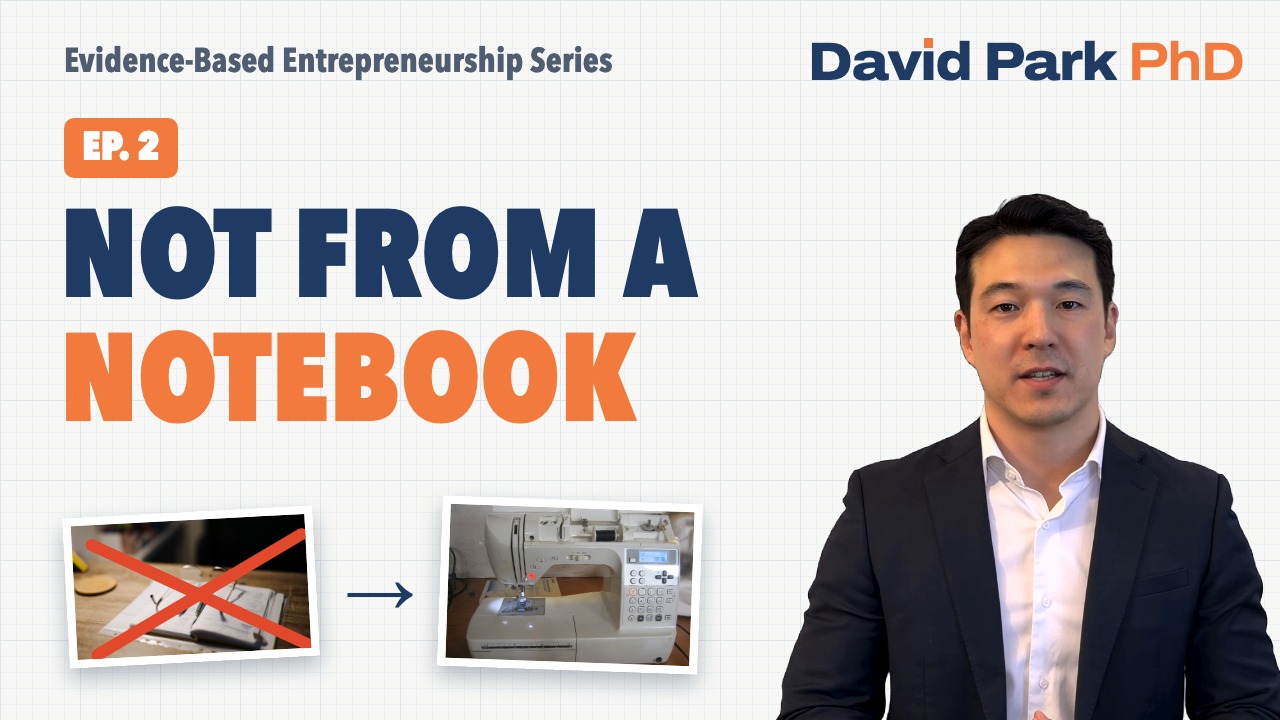 Coming to YouTube soon
About this episode
Before Gymshark, Ben Francis tried apps and a website. What worked was a problem he had himself: he couldn't find gym clothes that fit, so he started sewing his own in his family's garage.
This episode shows where good opportunities usually start: a real problem people already pay for, wait for or work around, in a place you know better than most, at a moment when something has changed. It looks at research on user entrepreneurs, then introduces MERIT, the five questions this series uses to judge an idea, and runs the Gymshark garage through it.
The five MERIT questions
For each one, write down what would have to be true, how good it looks, and how you know.
- MMarketWho is the customer, how many are there, and will they pay?
- EEdgeWhy you, and what stops others copying you once it works?
- RReturnsDoes the price cover the cost, and is it worth it for you?
- IImplementationCan you build it, reach the people who want it and deliver?
- TTeamDo you have the skills it takes, and who do you need to bring in?
Chapters
- Two people, one question
- Where Gymshark came from
- How you know a problem is real
- The person with the problem
- From a fix to a business
- What MERIT is
- The garage, letter by letter
- What happened next
- Finding yours
- Next time
Sources
- Shah, S. K., & Tripsas, M. (2007). The accidental entrepreneur: The emergent and collective process of user entrepreneurship. Strategic Entrepreneurship Journal, 1(1-2), 123-140, doi.org
- Park, Rha, Shah and Chattopadhyay (2024), Industrial and Corporate Change, 33(1), 64-89, doi.org
- Gymshark, "The Official Gymshark Story" (the company's own account), gymshark.com
- Forbes Australia, April 7, 2023, on Ben Francis and Gymshark, forbes.com.au
- Mark Sweney, The Guardian, July 3, 2026 (the 2020 valuation of 1.25 billion pounds), theguardian.com
The nurse is an illustrative example. Money is given in US dollars, converted from pounds at about $1.50 to the pound.